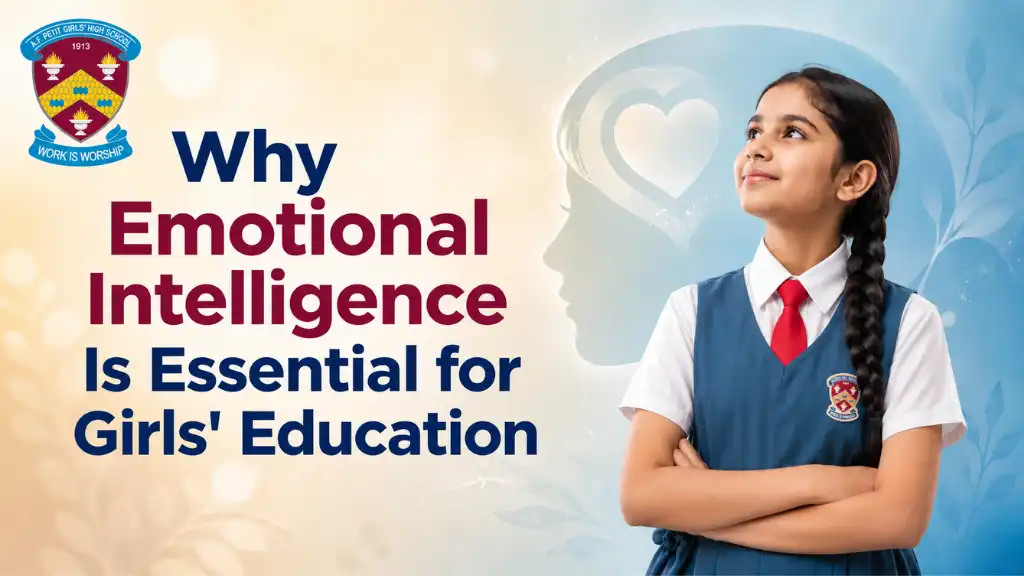
Education is not only about learning mathematics, science, languages or preparing for examinations. It is also about helping a child understand herself, communicate confidently, handle challenges and build healthy relationships.
For girls, these abilities can make a meaningful difference throughout their school years and beyond. A student may be academically capable, but knowing how to manage disappointment, speak up respectfully, cope with pressure or understand another person’s feelings is equally valuable.
This is where emotional intelligence (EI) becomes an important part of education. At Bai Avabai Framji Petit Girls’ High School, nurturing these skills is not an additional responsibility. It is part of preparing students for real life. Let’s dive in to learn more about emotional intelligence and understand why it matters in girls’ education.
What Is Emotional Intelligence (EI)?
Emotional intelligence in students means being able to understand what they are feeling and respond to those feelings in a healthy way.
For example, a student who does not perform well in an examination may initially feel disappointed. Emotional intelligence helps her recognize that disappointment without allowing it to define her abilities. She can reflect on what went wrong, ask for help and try again.
Similarly, when a disagreement occurs between friends, emotional intelligence helps a student listen, communicate her feelings and work towards a solution rather than reacting impulsively.
Key Elements of Emotional Intelligence
Emotional intelligence among school students generally involves:
- Self-awareness: Understanding feelings, strengths and areas that need improvement.
- Self-management: Handling emotions and reactions appropriately.
- Empathy: Understanding how another person may be feeling.
- Communication: Expressing thoughts and feelings clearly and respectfully.
- Relationship skills: Building positive and respectful connections with others.
- Responsible decision-making: Thinking about the possible consequences before acting.
These skills develop gradually. They need patience, encouragement and opportunities for children to practise them.
Why Is Emotional Intelligence Important in Girls’ Education?
Girls today are growing up in a world that offers exciting opportunities but also brings academic pressure, social expectations, changing relationships and constant exposure to information.
Education therefore needs to prepare girls not only to succeed academically but also to navigate these experiences with confidence and maturity.
1. It Builds Self-Confidence
Confidence does not mean believing that you will always succeed. It means knowing that you can face challenges, learn from mistakes and keep moving forward.
Emotional intelligence helps girls understand their strengths while accepting that nobody is perfect. This can encourage them to participate in classroom discussions, take part in competitions, ask questions and try unfamiliar activities.
A confident student is more likely to say, “I don’t understand this yet. Can you explain it?” instead of being afraid of making a mistake.
2. It Helps Girls Manage Academic Pressure
Examinations, assignments and expectations can sometimes feel overwhelming. A student who understands her emotions can identify when she is feeling anxious, frustrated or tired. Instead of ignoring these feelings or reacting negatively, she can learn healthy ways to manage them.
Simple habits such as taking a short break, organizing study time, speaking to a teacher or counsellor and breaking a difficult task into smaller steps can make challenges feel more manageable.
3. It Encourages Empathy and Kindness
School is a social environment. Students interact with classmates who may have different personalities, interests, opinions and experiences. Empathy teaches girls to look beyond their own perspective.
A student may notice that a classmate is unusually quiet or struggling with something. Rather than judging her, she can choose to listen or offer support. These small moments of understanding can help create a kinder and more inclusive school environment.
4. It Strengthens Communication Skills
Knowing what to say is important, but knowing how to say it is equally important. Emotional intelligence helps students communicate their feelings without unnecessarily hurting others. It also teaches them to listen rather than immediately react.
These skills are useful during group projects, classroom discussions, friendships, disagreements and leadership opportunities. As girls grow older, effective communication becomes valuable in higher education, professional environments and personal relationships.
5. It Helps Students Handle Failure
Every student experiences setbacks. A lower mark, losing a competition, making a mistake during a performance or experiencing a disagreement with a friend can be difficult.
Emotional intelligence helps girls understand that one difficult experience does not determine their worth or future. Instead of thinking, “I am not good at this,” they can learn to ask, “What can I learn from this?”
This shift encourages resilience and a healthier attitude towards challenges.
How Schools Can Develop Emotional Intelligence
Emotional intelligence cannot be developed through a single lesson. It grows through everyday experiences, conversations and relationships.
1. Classroom Discussions
Teachers can create opportunities for students to discuss emotions, situations and different points of view. Stories, literature, role-play and classroom conversations can help students understand how characters or people might feel in different situations.
2. Group Activities
Teamwork teaches students to listen, cooperate, share responsibilities and handle differences of opinion. Sports, projects, debates, drama and other group activities provide natural opportunities for students to practise these skills.
3. Life Skills Education
Life skills programmes can help students learn practical ways to manage emotions, communicate effectively, handle conflicts and deal with everyday challenges.
At Bai Avabai Framji Petit Girls’ High School, the school’s Skill Enhancement Department includes psychologists, counsellors and special educators. The school conducts Social-Emotional Learning classes in the Pre-Primary section and Life Skills classes for Grades 1 to 10. These programmes cover areas including understanding emotions, self-esteem, peer relationships, conflict resolution, social skills, anger management and stress management.
4. Encouraging Healthy Expression
Children should feel comfortable talking about their emotions without being made to feel embarrassed for having them.
Teachers and parents can encourage students to use words to describe what they are experiencing. Saying “I feel nervous about the presentation” is much healthier than simply avoiding the presentation.
5. Giving Students Responsibility
Leadership opportunities can also develop emotional intelligence.
House activities, sports, cultural events, debates and collaborative projects allow girls to practise decision-making, teamwork and responsibility. Our School’s house system, for example, encourages healthy competition and participation across academics, games and co-curricular activities.
The Role of Parents in Building Emotional Intelligence
Schools play an important role, but emotional development does not stop at the school gate. Parents can support emotional intelligence through simple everyday habits.
Instead of immediately solving every problem, parents can ask questions such as:
- “How did that situation make you feel?”
- “What do you think you could do differently next time?”
- “How do you think your friend felt?”
- “What would help you feel better right now?”
Listening without immediately judging can also encourage children to speak openly.
Most importantly, children learn by observing adults. When parents demonstrate patience, empathy and respectful communication, they show children what emotional intelligence looks like in everyday life.
Conclusion
A girl may forget a formula, a definition or even the marks she received in a particular examination. But the confidence to speak up, the courage to try again after failure, the empathy to understand someone else and the ability to handle difficult moments are lessons she can carry for life. That is the real value of emotional intelligence.
When girls are encouraged to understand their emotions rather than hide them, they become more comfortable with who they are. When they learn to listen, communicate and respect different perspectives, they build stronger relationships. And when they learn that setbacks are not failures but opportunities to grow, they become more resilient.
At Bai Avabai Framji Petit Girls’ High School, education is about nurturing the person behind the marksheet. Along with academic learning, giving girls opportunities to develop life skills, participate, collaborate, express themselves and take on responsibilities can help prepare them for the many experiences that lie ahead.
FAQs
1. Do Girls Have Higher Emotional Intelligence?
Research suggests that girls and women may perform better on some measures of emotional intelligence, particularly empathy and recognising emotions. However, emotional intelligence varies from person to person and can be developed through learning, practice and supportive environments.
2. Why Is Emotional Intelligence Necessary?
Emotional intelligence is necessary because it helps students understand and manage emotions, communicate effectively, handle stress, build healthy relationships and respond thoughtfully to challenges. For girls, these skills can support confidence, resilience, decision-making and overall personal development.
3. How does emotional intelligence improve student confidence?
Emotional intelligence helps students recognise their strengths and understand their emotions. When girls learn that mistakes and setbacks are part of learning, they become more willing to participate, ask questions, accept feedback and try challenging activities.
4. How can schools develop emotional intelligence in girls?
Schools can develop emotional intelligence through life-skills education, classroom discussions, teamwork, sports, role-play, counselling and leadership activities. These experiences give girls opportunities to practise empathy, communication, self-awareness, emotional regulation and responsible decision-making.
5. Can emotional intelligence be improved in children?
Yes, emotional intelligence can be developed with consistent guidance and practice. Encouraging children to identify emotions, communicate openly, consider others’ perspectives, solve conflicts and reflect on experiences can gradually strengthen their emotional and social skills.