Admission Open         Admission Open         Admission Open         Admission Open         Admission Open         Admission Open        

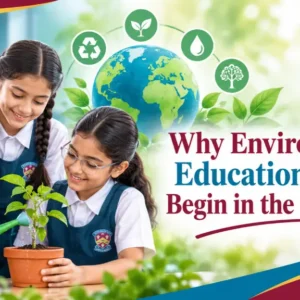
Students learning about environmental education in the classroom at Bai Avabai Framji Petit Girls’ High School
Post

Why Environmental Education Should Begin in the Classroom

Ask any child in Mumbai what the monsoon means to her, and you will hear about paper boats, puddle jumps and the joy of a surprise holiday. Ask one more question, like why the water on her street does not drain away, and the conversation suddenly gets interesting. That spark of curiosity is where environmental...

Ask any child in Mumbai what the monsoon means to her, and you will hear about paper boats, puddle jumps and the joy of a surprise holiday. Ask one more question, like why the water on her street does not drain away, and the conversation suddenly gets interesting. That spark of curiosity is where environmental education truly begins, and the classroom is the best place to nurture it.

Children today hear words like climate change, plastic pollution and heatwaves almost daily. What they often lack is a calm, guided space to understand these ideas, ask questions and figure out what they can actually do about them. Schools can offer exactly that. At Bai Avabai Framji Petit Girls’ High School, we see caring for the environment not as a one-day activity around World Environment Day, but as a way of thinking that grows with every lesson.

In this blog, we look at what environmental education really means, why the classroom is the right starting point, and how teachers and parents can work together to raise children who care for the world around them.

What Is Environmental Education?

Environmental education is learning that helps children understand how nature works, how human choices affect it, and how they can make responsible decisions in daily life. It is not limited to one textbook chapter on pollution. It blends science, geography, social studies, language and even art.

Put simply, it helps a child answer three questions: How does the world around me work? How do my actions affect it? And what can I do to help?

Environmental Education vs Environmental Awareness

Awareness is knowing that plastic harms the ocean. Education goes a step further. It teaches a child why plastic does not break down, where her waste goes after it leaves home, and which small habits make a real difference. Awareness informs; education changes behaviour.

Why the Classroom Is the Right Place to Start?

Children spend a large part of their day at school. The habits they practise there, from switching off fans to carrying a refillable water bottle, slowly become part of who they are. Here is why the classroom matters so much.

1. Habits Formed Early Tend to Last

Values picked up in childhood are the hardest to shake. A girl who learns to separate wet and dry waste at eight is far more likely to do it without thinking at eighteen. When parents look for the right Girls Primary School Mumbai has to offer, it is worth asking how the school builds everyday habits like these, not just how it prepares children for tests.

2. Teachers Make Big Topics Less Frightening

News about melting glaciers or record heat can leave young children anxious. A good teacher breaks these topics into age-appropriate pieces, explains the science gently and always ends on a hopeful note: what people around the world are doing, and what children can do too. This balance helps students feel capable rather than helpless.

3. It Connects Every Subject

Environmental learning fits naturally into almost every period of the day. A maths lesson can measure how much water a leaking tap wastes in a week. A geography class can explore why Mumbai’s mangroves protect the coastline. An English period can become a persuasive letter about a littered street. When children see the same idea from different angles, it stays with them.

4. Schools Can Lead by Example

A school that saves electricity, reduces paper use and cares for its green spaces is teaching even when no lesson is going on. Students learn as much from what they see around them as from what they read.

How Environmental Education Supports a Child’s Overall Growth?

The benefits go well beyond knowing facts about nature. Environmental education builds skills that help children in every part of life.

Critical Thinking and Problem-Solving

When students investigate why a nearby lake looks polluted or why the school garden keeps drying out, they learn to ask questions, gather facts and suggest solutions. This kind of hands-on inquiry is closely linked to project-based learning, where students turn classroom knowledge into real-world solutions.

Responsibility and Empathy

Looking after a plant, feeding birds or keeping a shared space clean teaches children that their actions affect others. That sense of responsibility carries over into how they treat classmates, family and their wider community.

Leadership and Confidence in Girls

Environmental projects give girls a natural reason to speak up, lead small teams and present ideas in front of others. Planning a recycling drive or sharing a water-saving idea at assembly builds confidence that lasts. These are among the life skills schools should teach alongside academics, and they matter long after school ends.

Better Wellbeing

Time spent outdoors, gardening or simply observing nature is often linked with calmer minds and better focus in children. Learning about the environment naturally encourages more of these moments beyond the four walls of a classroom.

Why It Matters Even More for Children in Mumbai

City children live with environmental challenges every day. Monsoon flooding, hotter summers, hazy winter air and shrinking open spaces are all part of growing up in Mumbai. Maharashtra banned many single-use plastic items back in 2018, yet plastic waste is still easy to spot on our beaches and streets.

For a Mumbai child, environmental education is not about faraway rainforests. It is about understanding her own neighbourhood, from the trees on her road to the drains outside her school, and realising that small local actions really do add up.

Learning From Local Examples

The city itself is a wonderful outdoor classroom. The mangroves along our coastline, the green stretches of Sanjay Gandhi National Park and the community beach clean-ups at places like Versova give teachers real, relatable examples. Lessons feel alive when children can picture the place being discussed.

Practical Ways to Bring Environmental Education Into the Classroom

Meaningful environmental learning does not need expensive equipment. The most effective ideas are simple, regular and fun.

Simple Activities for Primary Classes

1. Seed and Plant Projects: Growing a bean plant in a recycled cup teaches patience, observation and basic science, all at once.

2. Waste Segregation Corners: Colour-coded bins in every classroom turn sorting waste into a daily routine instead of a rule to remember.

3. Nature Journals: Children draw or write about a tree, bird or cloud they noticed that week. It sharpens attention and builds vocabulary.

4. Water and Energy Checks: Young “monitors” can make sure taps are closed and lights are off before recess, which gives them a small sense of ownership.

Activities for Older Students

1. Research on Local Issues: Students can study a real problem, such as noise or air quality near the school, and present their findings and ideas.

2. Eco Clubs and Student Committees: Student-led clubs plan awareness drives, upcycling workshops and green campaigns, giving girls real leadership experience.

3. Debates and Awareness Campaigns: Debating topics like “Should plastic packaging be taxed?” helps students see different sides of an issue and express their views clearly.

The Role of Parents in Continuing the Lesson at Home

What a child learns at school grows stronger when it is practised at home. Parents do not need to become experts. Letting your daughter manage the family’s recycling, carrying cloth bags to the market together, walking short distances instead of driving, and talking about environmental news over dinner all send a simple message: this matters in our home too.

When school and home speak the same language, children stop seeing green habits as homework and start seeing them as normal life.

Environmental Learning at Bai Avabai Framji Petit Girls’ High School

As a Parsi school in Mumbai with a long tradition of educating girls, Bai Avabai Framji Petit Girls’ High School believes that good education prepares students for life, not only for exams. Respect for the natural elements, such as water, earth and fire, has long been part of Parsi heritage, and that spirit of care fits naturally into how we guide our students.

Through classroom discussions, activities and school events, our girls are encouraged to observe, ask questions and take thoughtful action. The goal is simple: to help every student see herself as a caretaker of her surroundings and a confident voice for positive change.

Conclusion: Small Lessons, Lifelong Impact

Environmental education is not one more subject squeezed into a busy timetable. It is a way of seeing how everything is connected, from the water we use to the air we breathe. When this learning begins early in the classroom, it shapes thoughtful, responsible and confident young people who carry these values into their homes, careers and communities.

The children sitting in our classrooms today will be the ones making decisions about our cities tomorrow. Giving them the knowledge and confidence to care for the planet may be one of the most valuable lessons any school can teach.

Looking for a school that prepares your daughter for exams and for life? Explore admissions at Bai Avabai Framji Petit Girls’ High School or send us an enquiry to plan a visit and meet our teachers.

FAQs

1. What is environmental education in schools?

Environmental education in schools teaches children how nature works, how human actions affect it, and how they can make responsible choices. It blends science, geography and life skills through lessons, activities and real-world projects.

2. Why should environmental education start at a young age?

Habits and values formed in early childhood tend to last. When children learn to save water, reduce waste and respect nature in primary school, these actions become natural behaviour they carry into adulthood.

3. How can teachers include environmental education in the classroom?

Teachers can link it to everyday subjects, such as measuring water wastage in maths or writing about pollution in English. Classroom gardens, waste segregation, nature journals and local projects also make learning practical.

4. Is environmental education part of the Indian school curriculum?

Yes. Following a Supreme Court directive, environmental education is a compulsory part of school learning in India. The National Education Policy 2020 also encourages awareness of climate change and sustainability across subjects.

5. How can parents support environmental education at home?

Parents can involve children in recycling, carry cloth bags, save water and electricity together, and talk about environmental news at home. When families practise what schools teach, children see green habits as normal. 

6. What are some easy environmental activities for primary school students?

Simple activities include growing plants in recycled cups, sorting classroom waste into coloured bins, keeping a nature journal, switching off unused lights, and joining supervised clean-up drives with classmates and teachers.

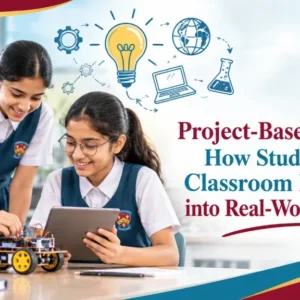
Ask a group of schoolgirls to find the area of a rectangle, and most will reach for a formula. Ask them to plan a vegetable patch for the school terrace on a fixed budget, and something changes. They measure, debate, sketch, rethink, and finally create something they can see and touch. That shift, from memorising to making, sits at the heart of project-based learning.

For parents searching for a Parsi school in Mumbai that prepares daughters for life beyond exams, this approach deserves a closer look. At Bai Avabai Framji Petit Girls’ High School, we believe children learn best when lessons connect to the world outside the classroom window. In this blog, we explain what project-based learning means, how it works day to day, and why it matters so much for girls growing up today.

What Is Project-Based Learning?

Project-based learning (often shortened to PBL) is a teaching method where students explore a real question or challenge over several days or weeks. Instead of hearing about a topic and then writing a test, they investigate it, work together, and produce something meaningful at the end. That outcome might be a model, a short film, a survey report, a campaign poster, or a working prototype.

The key word here is real. A good project starts with a problem that matters to students, such as how to reduce plastic waste in the school canteen or how to make a local park safer for younger children.

How It Differs from Traditional Learning

Textbooks and teacher-led lessons still play an important role. Project work simply builds on them. Here is a quick comparison:

Traditional Classroom

Project-Based Classroom

Teacher explains, students listen

Students ask questions and investigate

Learning ends with an exam

Learning ends with a finished product or presentation

Subjects taught separately

Science, maths, language and art often blend

Mostly individual work

Plenty of teamwork and discussion

Correct answers matter most

The thinking process matters just as much

In short, traditional teaching hands children the knowledge. Project work shows them what to do with it.

How Students Turn Classroom Knowledge into Real-World Solutions

Every strong project follows a natural rhythm. Children move from curiosity to action, and each stage asks them to use what they have already studied.

1. Begin with a Meaningful Question

A project opens with a “driving question” that has no single right answer. For example: How can our class cut down on water wasted during lunch break? Suddenly, a chapter on the water cycle feels personal.

2. Research and Plan

Students gather facts from books, websites, interviews, and their own observations. They divide roles, set deadlines, and agree on a plan. This is where reading, note-taking, and basic data skills get a genuine workout.

3. Create, Test, and Improve

Next comes the hands-on part. Teams build a model, design a poster, or try out a solution. When something fails, they adjust and try again. Learning to treat mistakes as feedback is one of the most valuable lessons any child can take away.

4. Present to a Real Audience

Finally, students share their work with classmates, parents, teachers, or members of the community. Speaking to a genuine audience pushes them to explain ideas clearly and stand behind their findings.

Project Ideas That Connect Subjects to Everyday Life

Here are a few examples of how familiar subjects can become practical, problem-solving projects:

1. Science: A Green Campus Audit

Girls track electricity, water, and paper use around school, then suggest simple changes and measure the results over a month.

2. Mathematics: Budgeting a Class Event

Students plan a farewell party or charity sale within a set amount, comparing prices, calculating percentages, and keeping accounts.

3. Social Studies: Mapping Our Neighbourhood

Teams study the history, heritage buildings, and civic needs of their locality, then present ideas to make it cleaner or safer.

4. Languages and Art: A Community Awareness Campaign

Girls write slogans, design posters, and script short skits on topics like road safety, healthy eating, or kindness online.

Why Project-Based Learning Matters for Girls

Research from groups such as the OECD and various education bodies has long pointed out that girls often doubt their abilities in subjects like science and maths, even when their marks are strong. Hands-on projects help close that confidence gap because success is visible. A girl who builds a working water filter knows she understands filtration; she does not need a grade to tell her.

  1. Confidence and a Stronger Voice: Presenting findings, answering questions, and defending a decision in front of others helps girls speak up with assurance. Over time, shy students often surprise themselves.
  2. Leadership and Teamwork: In every group, someone has to coordinate, someone has to listen, and someone has to resolve disagreements. Rotating these roles lets each girl practise leading as well as supporting.
  3. Critical Thinking and Problem-Solving: Real problems are messy. Students learn to weigh options, question sources, and choose the most practical path rather than the most obvious one.
  4. Empathy and Social Responsibility: When projects focus on community needs, children begin to see themselves as people who can make a difference. That sense of purpose stays with them long after school.

This is exactly why many families looking for a Parsi school in Mumbai now ask about hands-on learning during admissions, not just board results and facilities.

Learning by Doing at Bai Avabai Framji Petit Girls’ High School

At Bai Avabai Framji Petit Girls’ High School, we see the classroom as a starting point, not a boundary. Our teachers encourage students to link lessons with activities, group assignments, exhibitions, and community initiatives wherever the curriculum allows. The aim is simple: every girl should leave school knowing not only what she has learnt but also how to use it.

Our focus on girls’ education shapes this approach. In an all-girls setting, students take on every role in a project, from team leader to researcher to presenter, without hesitation. They lead, build, question, and present with growing self-belief.

How Parents Can Support Project Work at Home

Families play a quiet but powerful part. A few easy ways to help:

  • Ask open questions such as “What problem are you trying to solve?” rather than “Is it finished?”
  • Let your daughter make small mistakes and fix them herself.
  • Share everyday challenges, like planning the monthly grocery list, as mini projects.
  • Attend exhibitions and presentations whenever possible; an audience means a lot.
  • Praise effort, curiosity, and teamwork, not just the final result.

Final Thoughts

Project-based learning turns knowledge into action. It teaches girls that the formulas, facts, and stories they study are tools for improving the world around them. More importantly, it builds the confidence, resilience, and teamwork they will rely on in higher studies, careers, and life.

If you are exploring a Parsi school in Mumbai that values both academic strength and real-world readiness, we warmly invite you to learn more about Bai Avabai Framji Petit Girls’ High School and see how our students learn by doing.

Want to see how your daughter can learn by doing? Visit Bai Avabai Framji Petit Girls’ High School, meet our teachers, and explore our classrooms. Contact our admissions office today.

FAQs

1. What is the meaning of project-based learning?

Project-based learning is a teaching method where students explore a real-life question over several days or weeks. They research, collaborate, and create a final product, such as a model or presentation, that shows what they have understood.

2. How does project-based learning help girls?

It builds confidence, leadership, and problem-solving skills. Girls see their ideas work in practice, present before real audiences, and take on every team role, which helps them trust their abilities in science, maths, and beyond.

3. Does project-based learning replace textbooks and exams?

No. Textbooks and exams still matter. Project-based learning works alongside them, helping students apply what they read in class to practical situations, which often deepens understanding and improves how well they remember concepts.

4. What are some examples of real-world school projects?

Popular examples include auditing water and electricity use on campus, budgeting a class event, mapping local heritage sites, building simple science models, and running awareness campaigns on topics like road safety or healthy eating.

5. How do I choose a school in Mumbai that offers hands-on learning?

Visit the campus, ask how teachers use projects and activities, and look at student work on display. A good Parsi school in Mumbai, like Bai Avabai Framji Petit Girls’ High School, balances academics with practical learning.
financial literacy for girls
Post

Why Financial Literacy Should Be Part of Every Girl’s Education

Ask a group of grown women when they first understood how a loan, a credit card, or a fixed deposit really works, and you will hear a lot of nervous laughter. For many of us, money lessons came late, usually after a costly mistake. That is exactly why financial literacy deserves a place in the...

Ask a group of grown women when they first understood how a loan, a credit card, or a fixed deposit really works, and you will hear a lot of nervous laughter. For many of us, money lessons came late, usually after a costly mistake. That is exactly why financial literacy deserves a place in the classroom, and the earlier, the better.

As a girls’ school in Mumbai that has educated young women for generations, Bai Avabai Framji Petit Girls’ High School sees one thing again and again: girls grow bolder when they understand how the world works. Money is a huge part of that world, yet it is rarely taught with the same care as science or languages.

So what do we mean by financial literacy? Put simply, it is the ability to earn, save, spend, budget, and plan wisely. It is not about turning ten-year-olds into stock traders. It is about building habits and good judgment that last a lifetime.

Why Money Skills Matter Even More for Girls

Every child benefits from understanding money. For girls, though, the stakes are a little higher, and the reasons are practical rather than political.

1. The Confidence Gap Is Real

Global studies have repeatedly found that women tend to rate their financial knowledge lower than men do, even when they know just as much. That self-doubt often leads women to hand over big decisions to someone else. Early practice in a safe setting replaces hesitation with self-assurance.

2. Longer Lives, Different Career Paths

Women generally live longer than men. Many also take career breaks to care for children or ageing parents. Both realities mean their savings need to stretch further. A girl who learns about saving early, and about how small amounts grow over time, starts with a clear advantage.

3. Independence Means Real Choices

Financial independence is not about rejecting help or partnership. It is about having choices. A young woman who can read a salary slip, manage a budget, and spot a bad deal can choose her career, her home, and her future on her own terms.

What Financial Literacy Looks Like at Every Stage

The good news is that money lessons do not need a separate, heavy syllabus. They fit naturally into everyday learning when introduced at the right age.

1. Primary Years: Building the Basics

Young children can grasp more than we think. Counting coins, playing “shop” in class, and understanding the difference between needs and wants all lay a strong foundation. A simple savings jar teaches patience better than any lecture.

2. Middle School: Planning and Choosing

By ages ten to thirteen, girls can manage a small budget for a class event, compare prices, and understand simple interest. Maths word problems become far more interesting when they involve planning a school picnic or saving for a new bicycle.

3. Senior School: Real-World Readiness

Teenagers are ready for bigger ideas: how bank accounts work, what compound interest means, why credit cards need careful handling, and how salaries, taxes, and expenses fit together. Career discussions can include conversations about earning potential and financial goals.

A Quick Word on Digital Money

Today’s students pay with phones before they ever hold a chequebook. Lessons on UPI safety, OTP fraud, and online shopping scams are no longer optional. They are basic self-protection.

Values First: Money as a Tool, Not a Goal

Knowing how to handle money is only half the lesson. The other half is knowing what money is for.

Mumbai’s Parsi community has a remarkable history of enterprise paired with generosity. Hospitals, libraries, trusts, and schools across the city stand as proof that wealth can be built thoughtfully and shared meaningfully. As a Parsi school in Mumbai, Bai Avabai Framji Petit Girls’ High School carries that spirit forward, encouraging students to see money as a means to security, dignity, and service.

In practice, this means talking with girls about honesty in dealings, living within one’s means, and giving back. A class charity drive, for instance, teaches budgeting, teamwork, and compassion all at once.

How Parents Can Help at Home

School lays the groundwork, but home is where habits stick. A few small steps make a big difference:

  • Give pocket money with a plan. Let your daughter split it into spending, saving, and sharing.
  • Bring her into everyday decisions. Ask her to help compare prices during grocery shopping or plan a family outing budget.
  • Talk openly about money. Avoid treating finances as a secret or a source of stress.
  • Open a minor savings account. Watching interest add up builds genuine excitement about saving.
  • Allow small mistakes. Spending all her money on day one and waiting for next month is a valuable lesson.

When parents and teachers send the same message, girls absorb it faster and remember it longer.

The Long-Term Payoff

A financially aware girl grows into a woman who negotiates her salary, questions unclear paperwork, plans for retirement, and supports causes she believes in. She is harder to mislead and far more likely to thrive.

These lessons cost very little to teach, yet their value multiplies over a lifetime, much like compound interest itself.

If you are searching for a Girls School in Mumbai that prepares students for life, not just examinations, look for one that treats practical skills with the same seriousness as academics. At Bai Avabai Framji Petit Girls’ High School, a respected Parsi school in Mumbai, we believe every girl deserves to step into adulthood confident, capable, and ready to take charge of her own future.

Ready to give your daughter a head start? Visit our campus, meet our teachers, and discover how we nurture independent, money-smart young women. Contact our admissions office today to book a visit.

FAQs

1. What is financial literacy for girls?

Financial literacy for girls means teaching them how to earn, save, spend, budget, and invest wisely. It builds the confidence to make sound money decisions, avoid debt traps, and become financially independent adults.

2. At what age should girls start learning about money?

Girls can start as early as five or six with simple ideas like needs versus wants and saving coins. By their teens, they can learn budgeting, banking, interest, and how to stay safe while paying online.

3. Why is financial literacy important for women’s independence?

Money knowledge gives women real choices. It helps them manage career breaks, plan for longer life spans, avoid unhealthy financial dependence, and make major decisions about education, careers, homes, and family with confidence.

4. How can schools teach financial literacy to students?

Schools can weave money lessons into maths, run classroom shops, set budgeting projects, invite bankers or alumni to speak, and discuss real topics like online fraud, savings goals, and giving to charity.

5. How do I choose a school that teaches practical life skills?

Look for a girls’ school in Mumbai that values life skills alongside academics. Visit the campus, ask about activities beyond textbooks, and see whether teachers encourage girls to think independently, speak up, and solve real problems.