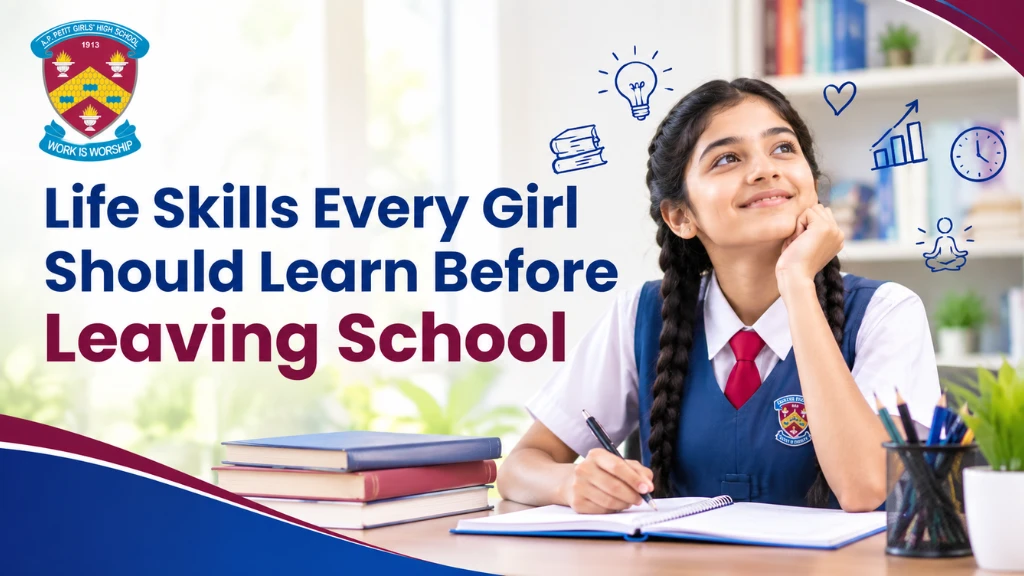
School is about much more than textbooks, examinations and report cards. It is also where children learn how to communicate, make decisions, manage emotions, work with others and gradually become independent.
For girls, developing these abilities before leaving school can make the transition to higher education, work and adult life much smoother. Academic knowledge provides an important foundation, but practical life skills help students use that knowledge confidently in the real world.
At Bai Avabai Framji Petit Girls’ High School, education extends beyond academics, with a focus on students’ social, emotional and personal development. The school’s Skill Enhancement Department provides life-skills classes and support in areas such as self-esteem, relationships, conflict resolution, cyber wellness, time management and stress management.
So, what are the life skills every girl should ideally develop before she leaves school?
What Are Life Skills?
Life skills are practical abilities that help students manage everyday situations, make decisions, communicate effectively and handle challenges.
They include communication, money management, problem-solving, emotional awareness, decision-making and personal safety. For students at an ICSE Girls School Mumbai, developing these skills alongside academics can build confidence, independence and practical thinking.
Important Life Skills Every Girl Should Learn
1. Effective Communication
Being able to express thoughts clearly is one of the most useful skills a student can develop.
Girls should learn how to:
- Speak clearly and respectfully
- Listen without interrupting
- Ask questions when they need clarification
- Express disagreement politely
- Communicate their needs and boundaries
Good communication can help students participate more confidently in classrooms, presentations, group projects, interviews and future workplaces.
2. Time Management and Organisation
As students grow older, their responsibilities usually increase. Balancing schoolwork, activities, hobbies, friendships and personal time requires organisation.
Simple habits can make a difference:
- Maintaining a daily schedule
- Prioritising important tasks
- Breaking large assignments into smaller steps
- Avoiding unnecessary last-minute work
- Keeping school materials organised
Time management does not mean filling every minute of the day. It means learning how to use time thoughtfully while leaving room for rest.
3. Financial Literacy
Every young person should understand the basics of managing money before becoming independent.
Girls can gradually learn about:
- Budgeting
- Saving
- Needs versus wants
- Responsible spending
- Bank accounts and digital payments
- Basic financial planning
Financial literacy gives students the confidence to make sensible decisions later in life. Even simple activities, such as planning a budget for a small event or tracking personal spending, can make money management easier to understand.
4. Emotional Awareness and Self-Management
Growing up brings academic pressure, changing friendships, disappointment, uncertainty and many new experiences.
Students should learn to recognise what they are feeling and understand healthy ways to respond.
This includes learning how to:
- Identify emotions
- Talk about feelings
- Manage frustration
- Handle disappointment
- Ask for support
- Practise healthy coping strategies
At Bai Avabai Framji Petit Girls’ High School, life-skills programmes address areas including understanding and managing feelings, self-esteem, self-motivation, stress management and relationships.
5. Critical Thinking and Decision-Making
Girls will eventually have to make countless decisions without someone else choosing them. Critical thinking helps students pause, consider information and understand possible consequences before deciding.
A student can practise this by asking:
What do I know? What am I assuming? What choices do I have? What could happen next?
This approach is particularly valuable in a world where students encounter large amounts of information online. A strong educational environment should encourage girls to ask questions, explore ideas and develop independent thinking rather than simply memorising information.
6. Digital Literacy and Online Safety
Technology is now part of everyday student life. Knowing how to use a device is not enough; students also need to understand responsible digital behaviour.
Important lessons include:
- Protecting passwords and personal information
- Recognising suspicious links and messages
- Understanding privacy settings
- Thinking before posting online
- Identifying unreliable information
- Using social media responsibly
- Knowing when to seek adult help
Cyber wellness is also included among the life-skills areas addressed by the school’s Skill Enhancement Department.
Digital safety is not about frightening children away from technology. It is about helping them use it confidently and responsibly.
7. Self-Confidence and Knowing Your Worth
Confidence does not mean believing you are better than everyone else. Healthy confidence means recognising your abilities while being comfortable with learning, making mistakes and asking for help.
Girls can build confidence by:
- Trying unfamiliar activities
- Speaking in front of others
- Taking responsibility for tasks
- Learning from mistakes
- Celebrating progress rather than only results
School activities such as debates, sports, drama, music and group projects can provide valuable opportunities for students to discover their strengths.
8. Problem-Solving and Adaptability
Not every problem has an immediate or perfect answer. Students should learn to approach challenges calmly, identify possible solutions and adjust when their first approach does not work.
For example, if a student struggles with a particular subject, problem-solving might involve changing her study method, seeking help from a teacher or creating a different revision routine. Adaptability teaches an equally important lesson: changing your approach is not the same as giving up.
How Schools Can Help Girls Develop Life Skills
Life skills become meaningful when students get opportunities to practise them.
Classroom discussions can develop communication and critical thinking. Sports and group activities can encourage teamwork. Presentations can strengthen confidence. Practical projects can teach responsibility and problem-solving.
A school’s approach matters because students spend a significant part of their formative years in that environment.
At Bai Avabai Framji Petit Girls’ High School, the educational approach includes academic, social and behavioural development. The school also provides counselling and specialised support, while its life-skills programme covers areas ranging from study skills and time management to relationships, emotional well-being and safety.
The school’s vision also emphasises resilience, adaptability, empathy, leadership, integrity and responsible citizenship.
Why Life Skills Matter Beyond School
The value of life skills does not end with the final school examination.
A student who can communicate effectively may find it easier to participate in a college presentation. Someone who understands budgeting may approach personal finances more responsibly. A girl who knows how to manage stress and seek help may be better prepared to handle unfamiliar situations.
These abilities continue developing throughout life. School can provide the foundation, while students, families and communities continue building on it.
Conclusion
Preparing girls for the future involves more than helping them achieve good grades. It means giving them the confidence to think independently, communicate respectfully, manage challenges and make responsible choices.
The years before leaving school are an important opportunity to build these foundations. With the right guidance and regular opportunities to practise, life skills can become natural habits rather than lessons students remember only for an examination.
For families exploring an ICSE Girls School Mumbai, it can be useful to look beyond academics and understand how a school supports the wider development of its students. A school should help girls grow into capable, thoughtful and responsible young women who are ready to take on the opportunities and challenges ahead.
For families interested in the heritage and educational approach of a Parsi School in Mumbai, Bai Avabai Framji Petit Girls’ High School offers a learning environment where academic development is supported alongside personal and social growth. The school has a long history in Mumbai and has welcomed day scholars from all communities since 1963.
FAQs
1. What are the most important life skills for girls before leaving school?
Communication, time management, financial literacy, emotional awareness, critical thinking, digital safety, confidence, problem-solving, healthy relationships and personal safety are valuable life skills that can help girls become more independent and responsible.
2. Why are life skills important for school students?
Life skills help students handle everyday responsibilities, relationships, challenges and decisions. They complement academic learning by helping children communicate effectively, manage emotions, solve problems and gradually become more confident and independent.
3. How can schools teach life skills to girls?
Schools can develop life skills through classroom discussions, projects, sports, debates, group activities, counselling, presentations and dedicated life-skills programmes. Regular opportunities to practise these abilities make learning more meaningful.
4. What financial skills should girls learn before leaving school?
Girls should understand basic budgeting, saving, responsible spending, needs versus wants, digital payments and simple financial planning. These foundations can help young adults make thoughtful financial decisions when they become more independent.
5. How can parents help their daughters develop life skills?
Parents can give age-appropriate responsibilities, encourage open communication, involve daughters in simple decisions, discuss money and safety, and allow them to learn from manageable mistakes while providing guidance when necessary.