Academic excellence has always been the foundation of quality education. However, in today’s fast-changing world, excellent grades alone are no longer enough to prepare students for the opportunities and challenges that lie ahead.
The future belongs to young individuals who can think critically, communicate confidently, solve problems creatively, adapt to change, and lead with empathy. These are life skills-practical abilities that enable students to navigate higher education, careers, relationships, and everyday life with confidence.
At Bai Avabai Petit Girls’ High School, education extends beyond textbooks and examinations. The goal is not only to help students achieve academic success but also to nurture confident, compassionate, independent, and responsible young women who are ready to make meaningful contributions to society.
Why Life Skills Are Just as Important as Academics
The world our students will enter is very different from the one previous generations experienced. Artificial Intelligence (AI), digital technologies, global collaboration, and rapidly evolving careers are transforming how we learn, work, and communicate.
While academic knowledge remains essential, employers, universities, and communities increasingly value qualities such as leadership, resilience, teamwork, creativity, emotional intelligence, and ethical decision-making.
These skills cannot be developed overnight. They grow gradually through meaningful experiences, supportive learning environments, and opportunities to apply knowledge beyond the classroom.
That is why schools today have an important responsibility, not just to educate students academically, but to prepare them for life.
What Are Life Skills?
Life skills are the practical, social, emotional, and cognitive abilities that help students confidently face everyday challenges and make thoughtful decisions throughout their lives.
They enable students to:
- Think independently
- Communicate effectively
- Work collaboratively
- Build healthy relationships
- Adapt to change
- Solve real-world problems
- Become responsible citizens
When combined with academic learning, these skills help students become lifelong learners and future leaders.
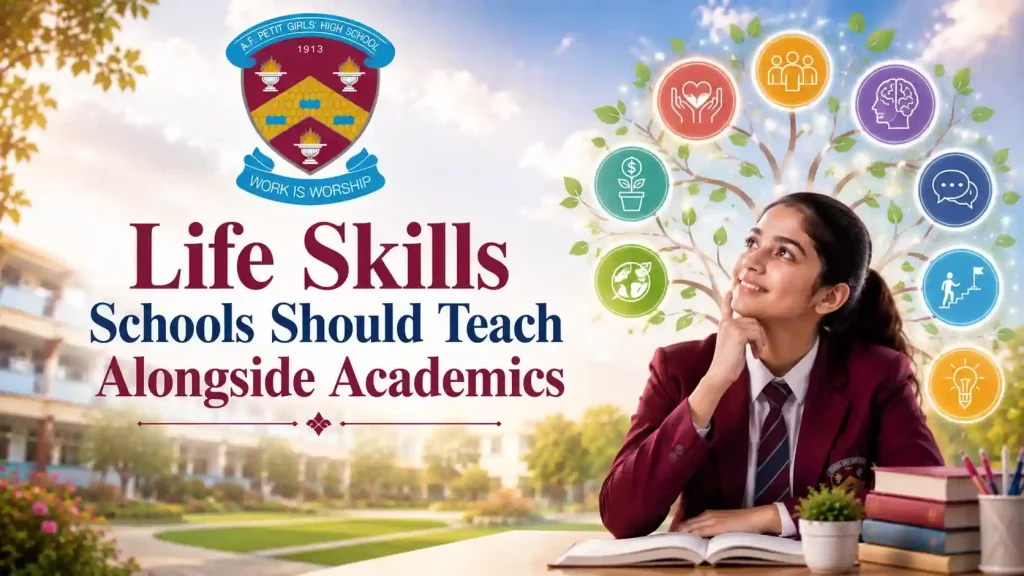
Essential Life Skills Every Student Should Develop
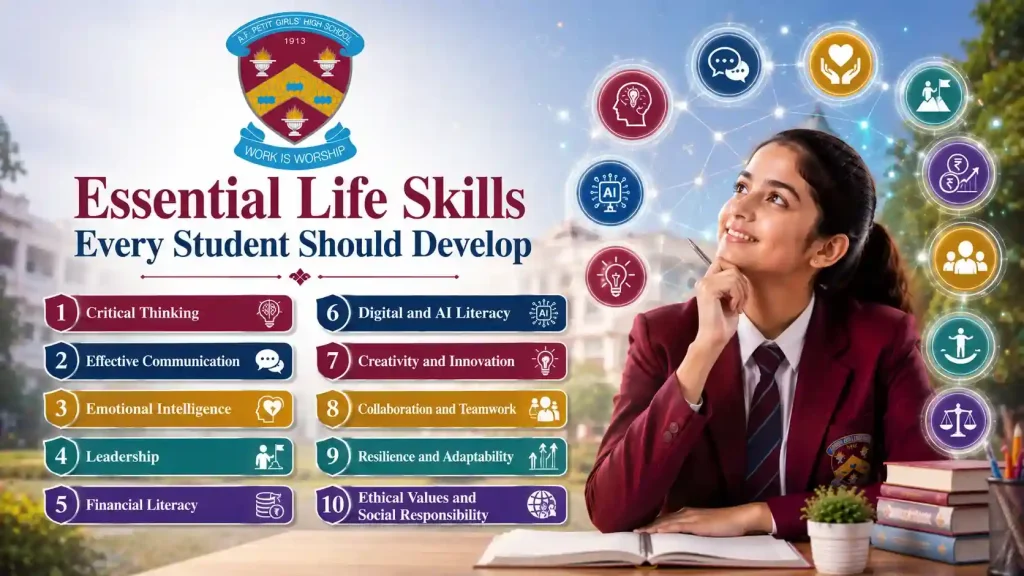
1. Critical Thinking
In an age where information is available instantly, students need the ability to question, analyse, evaluate, and make informed decisions.
Critical thinking encourages curiosity and helps students become independent learners rather than passive recipients of information.
Schools nurture this through inquiry-based learning, research projects, discussions, and problem-solving activities.
2. Effective Communication
Whether presenting ideas in class, participating in interviews, or collaborating with future colleagues, communication remains one of life’s most valuable skills.
Students benefit from opportunities to develop:
- Public speaking
- Active listening
- Creative writing
- Presentation skills
- Digital communication
Confident communication builds self-belief and leadership.
3. Emotional Intelligence
Success is not determined only by IQ.
Students who understand their emotions, empathise with others, manage stress, and resolve conflicts respectfully often build stronger relationships and become resilient individuals.
Developing emotional intelligence also contributes positively to mental well-being and overall confidence.
4. Leadership
Leadership begins long before students enter the workplace.
Taking responsibility, making ethical choices, supporting peers, and contributing positively to the school community are all valuable leadership experiences.
Student councils, house activities, community initiatives, sports, and collaborative projects provide opportunities for students to discover their leadership potential.
5. Financial Literacy
Understanding money management is an essential life skill.
Students should gradually learn concepts such as:
- Budgeting
- Saving
- Responsible spending
- Banking
- Investments
- Financial planning
These skills empower young adults to make informed financial decisions throughout their lives.
6. Digital and AI Literacy
Technology is reshaping education and careers.
Rather than simply using technology, students should understand how to use it responsibly, ethically, and creatively.
Important areas include:
- Digital citizenship
- Online safety
- Cybersecurity awareness
- Responsible AI usage
- Evaluating online information
- Using technology to enhance learning
These competencies prepare students for an increasingly digital future.
7. Creativity and Innovation
Creativity extends far beyond art and music.
Innovative thinking enables students to generate ideas, solve complex problems, and approach challenges from different perspectives.
Project-based learning, STEM activities, design thinking, and creative arts all encourage students to think beyond conventional solutions.
8. Collaboration and Teamwork
No meaningful achievement happens in isolation.
Students learn valuable interpersonal skills by working together, respecting diverse viewpoints, sharing responsibilities, and supporting one another.
Teamwork also helps students develop confidence, empathy, and mutual respect.
9. Resilience and Adaptability
Every student will encounter setbacks.
Resilience teaches them that challenges are opportunities for growth rather than reasons to give up.
By encouraging perseverance, reflection, and continuous improvement, schools help students become confident learners who embrace change with optimism.
10. Ethical Values and Social Responsibility
Education is also about character.
Integrity, kindness, empathy, respect, environmental responsibility, and service to society remain timeless values that shape responsible citizens.
When students develop strong values alongside academic knowledge, they are better equipped to make positive contributions to their communities.
Learning Beyond the Classroom
Life skills flourish through experience.
Activities such as sports, performing arts, debates, science exhibitions, community outreach, cultural programmes, leadership opportunities, educational excursions, and collaborative projects allow students to apply classroom learning in meaningful ways.
These experiences build confidence, independence, teamwork, and practical problem-solving abilities that cannot be measured through examinations alone.
The Role of Parents and Schools
Developing life skills is most effective when schools and families work together.
Parents can encourage independence by allowing children to make age-appropriate decisions, manage responsibilities, participate in community activities, and develop healthy habits at home.
Schools complement these experiences by providing a supportive environment where students are encouraged to ask questions, think creatively, collaborate respectfully, and grow into confident individuals.
Together, this partnership creates well-rounded learners who are prepared for both academic success and lifelong achievement.
Preparing Girls for the Future
Today’s girls are tomorrow’s innovators, entrepreneurs, researchers, educators, artists, scientists, and leaders.
Preparing them for this future requires more than academic excellence. It requires nurturing confidence, resilience, compassion, leadership, creativity, and a lifelong love of learning.
At Bai Avabai Petit Girls’ High School, education is about empowering every student to realise her full potential, not only as a successful learner but also as a thoughtful individual, responsible citizen, and confident young woman ready to embrace the opportunities of an ever-changing world.
Final Thoughts
The true purpose of education is not simply to prepare students for examinations; it is to prepare them for life.
When academic excellence is combined with strong values, practical skills, confidence, and compassion, students become capable of making meaningful contributions wherever life takes them.
By nurturing both intellectual growth and personal development, Bai Avabai Petit Girls’ High School remains committed to empowering every girl to learn with confidence, lead with integrity, and succeed with purpose.
Frequently Asked Questions
Life skills help students apply academic knowledge in practical situations while developing confidence, leadership, communication, emotional intelligence, and problem-solving abilities that are essential for lifelong success.
Critical thinking, communication, emotional intelligence, leadership, financial literacy, digital literacy, adaptability, resilience, teamwork, creativity, and ethical decision-making are among the most valuable skills for preparing girls for future education, careers, and life.
Students with strong organisational skills, emotional resilience, communication abilities, and effective study habits often perform better academically because they learn more confidently and manage challenges effectively.